Tuesday, January 29, 2013

Nexus 4 back in stock today in the U.S., too

The popular smartphone became available again in Germany earlier today, and it will now ship from the U.S. Google Play store to buyers in one to two weeks. Google also added Canada to the lineup.

Germany isn't the only country getting more Nexus 4 inventory today. The popular Google smartphone is now available in the U.S. and Canadian Google Play stores, as well.

The device, which costs $299 for the 8GB version or $349 for the 16GB model, will ship in one to two weeks for U.S. buyers, the site says. That's a big improvement from the recent wait times, as well as the general unavailability of the device. The phone earlier today also became available again in Germany, and it hit Canada shortly after arriving in the U.S. Google Play store.

The LG Nexus 4 has been selling out pretty rapidly since its November launch, with users forced to wait many weeks for the device to ship or to even show availability online. The smartphone is one developed closely with Google, giving a pure and polished experience with Android 4.2 Jelly Bean, as CNET reviewers have noted. However, it also lacks 4G LTE capabilities, though that doesn't appear to be hurting demand for the device.

The Nexus 4 sold out in less than half an hour the day it was released in mid-November.

A Google executive last month blamed LG for the shortage, saying supplies from the company have been "scarce and erratic." The company at the time vowed to improve the situation and said it should have good news to share shortly.


Microsoft Surface Pro software devours disk space

Microsoft Surface Pro runs Windows 8 Pro, which is needy when it comes to storage space. That leaves precious little space for user files on the 64GB version of the tablet.


Microsoft's Surface RT tablet was knocked for the dearth of storage on the low-end version. Surface Pro isn't faring much better.
The 64GB version of the upcoming Surface Pro -- due for release February 9 -- will offer only 23GB of available storage space for user files, according to a statement CNET received from Microsoft.
"The 128GB version of Surface Pro has 83GB of free storage out of the box. The 64GB version of Surface Pro has 23GB of free storage out of the box," a Microsoft representative said in a statement.
(Note that a report from Softpedia this morning claimed only 19GB is free on the 64GB version. In other words, Microsoft software occupies an equal amount of space on both versions, according to that report.)
In short, Windows 8 will gobble up as much as 45GB on the Surface Pro, according to Microsoft's specs.
Of course, to longtime Windows users this shouldn't come as a huge surprise. Windows 8 is not a petite operating system and it's the same Windows 8 that will run on laptops with much roomier 256GB, 512GB, and 1TB disk drives.
And the lack of lots of available storage on the 64GB model underscores why there are few 64GB Windows 8 systems shipping today.

Microsoft did offer this statement, in an attempt to assuage users feeling deprived of local storage:
"Surface Pro has a USB 3.0 port for connectivity with almost limitless storage options, including external hard drives and USB flash drives. Surface also comes preloaded with SkyDrive, allowing you to store up to 7GB of content in the cloud for free."

Microsoft continues. "The device also includes a microSDXC card slot that lets you store up to 64GB of additional content to your device. Customers can also free up additional storage space by creating a backup bootable USB and deleting the recovery partition."

Surface RT -- the first RT version released last year -- has similar storage constraints, as Microsoft's fine print shows.

For example, on the 32GB Surface RT, after allowing for the OS, Windows recovery tools, Microsoft Office, and built-in apps, you're left with 16GB. On the 64GB model, you get 46GB.

PD: Couple, 2 workers arrested in Phoenix prostitution business

PHOENIX - Police have identified four people who were arrested Tuesday in connection with an "ongoing" prostitution business.

Phoenix police served the first of two search warrants Tuesday morning, raiding a club called Champagne Room near 38th Street and Interstate 10.

Police also raided a home in Surprise, where Air15 video showed a security door ripped from the door frame and front windows broken out.

Some neighbors weren't surprised by the arrest because of the recent activity around the house over the past couple months.

"My wife took my daughter trick-or-treating there in October. The lady opened the door with the candy and in front of the room directly behind the door was a big king-sized bed and it had high-powered cameras aimed towards the bed with lights. When they told me what they saw, I've had the kids stay away from the house, " said Mike Boyle.
Sgt. Steve Martos said the raids come after a two-year investigation into Champagne Room, which he referred to as "an ongoing illegal enterprise and house of prostitution."
The club, owned and operated by Janet Fiore and her boyfriend Sterling Costa, was a "fortified brothel", which reportedly offered prostitution services for prices ranging between $300 and $1,000.
Tiphany Finklea, 22, and Margaret Pahssen, 37, were also arrested Tuesday. Fiore, Costa, Finklea and Pahssen were identified as having "a controlling and participating role" in the business.
Five people were initially taken into custody Tuesday morning, but Martos said two were released pending further investigation and an additional suspect was arrested later in the day.


Apple (AAPL) iPad: Why you might not need Apple's new 128GB iPad

In an age of streaming media, we're still a culture of digital hoarders.

That may partly explain why on Tuesday, Apple introduced an iPad with 128 gigabytes of storage capacity, twice as much as any previous model.
But will the average tablet owner need that much space?
For casual users, tablets are media-consumption devices. We use them to watch movies and TV shows, listen to music, play games and read books and magazines. All those files take up memory on your internal hard drive.
Today's high-resolution photos and videos are increasingly hogging storage, too. It's easy to see how someone with a lot of downloaded files might eventually run out of room on a 64GB tablet.
But 128 gigabytes? That's the equivalent of about 100 DVD-quality movies, 30 Blu-ray movies, 30,000 songs or 40,000 photos, according to a computer store in the United Kingdom.
Everything else about the iPad announced Tuesday is the same as the current fourth-generation models: a 9.7-inch Retina display, a dual-core A6X processor, a FaceTime HD camera, 2 gigabtyes of RAM and an estimated 10 hours of battery life.
So the new device, which goes on sale February 5, is all about giving users more storage space.
That's why Apple is targeting the 128GB iPad at professional users such as architects, doctors or audio engineers, who often work with large files (and can afford pricey gadgets).
"Companies regularly utilizing large amounts of data such as 3D CAD files, X-rays, film edits, music tracks, project blueprints, training videos and service manuals all benefit from having a greater choice of storage options for iPad," Apple said in a news release announcing the new iPad.
Some observers say the tablet's cost -- $799 (Wi-Fi only) and $929 (Wi-Fi and cellular), $100 more than the current 64GB model -- isn't worth it in an age when we can store movies, music, photos and documents on cloud-based servers instead of our own machines.
"Apple doesn't expect you to buy a 128GB iPad, not unless you're a professional-grade buyer, like an architect or a supervillain," writes Leslie Horn for Gizmodo. "The 128GB iPad is like a $300/head steakhouse dinner. It goes on the corporate account."
Other pundits noted that at $929, the top-of-the-line 128GB model costs almost as much as the base-model MacBook Air laptop ($999), which is much easier to type on.
"Apple has set its eyes on the dying infrastructure of the PC industry and Microsoft's Windows operating system business," writes Dan Rowinski of ReadWriteWeb. "That is really the only reason that Cupertino would unveil an iPad with 128 GB, a size that challenges many of the 'ultrabooks' that have become popular in the laptop market these days."
In that way, the launch of the new iPad seems poised to stave off competition from Microsoft's 128GB Surface Pro tablet, due February 9 in the U.S. and Canada.
When it comes to storage capacity, though, these tablets aren't close to being the biggest. That distinction belongs to the Panasonic Toughbook H2, which retails for $3,579 and has a whopping 320GB of internal storage.


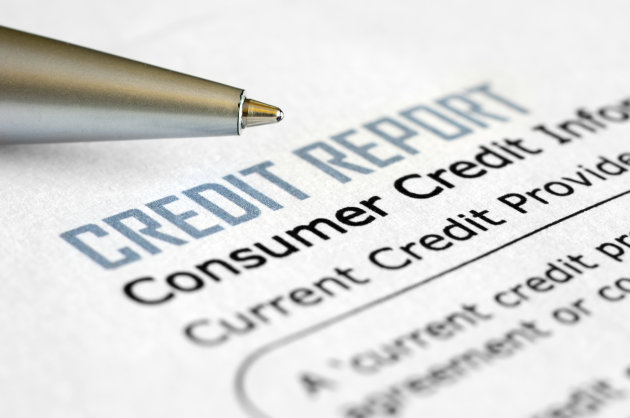
The Danger of Not Checking Your Credit Report

For so many of us, unless we know we have a pressing need to check our credit reports, it’s probably not at the top of the to-do list. But not taking time to regularly do so can be a costly mistake.
“I’ve had the experience of routinely getting my credit report, only to find a couple credit cards opened under my name [without my knowledge],” says Phoebe Stein, a librarian based in Yonkers, N.Y. “My credit score was fine, but that all could have had a worse outcome.”

Fortunately, Stein was able to cancel the cards taken out from the scammer before she took a hit on her credit. While she faced an uphill battle when she called the issuers to close them — she said the companies kept trying to get her to stay — had the cards stayed open, that could have led to several problems.
For one, as Credit.com expert Barry Paperno explains, having a “high credit utilization (balance/credit limit) can drop a high FICO score (780+) by as much as 45 points.”
Worse still, if Stein remained oblivious to the problem, late payments on the accounts could have piled up, trashing her score beyond repair. That isn’t uncommon, says Credit.com’s Director of Consumer Education Gerri Detweiler, who notes that thieves tend to open accounts, “pay the bills for a little while and then bail.” Most consumers don’t learn what has happened until it’s too late, and they pay dearly for it because a 30-day late payment can cause a high FICO score (780+) to drop as much as 100 points.
Shana Mosher, a public policy analyst in New York City, faced similar problems when she neglected to check her credit for several months. An Exxon gas card, long-distance phone cards, and “a card intended for purchasing Gateway computers” had all been opened under her name without her knowledge.
“People opened them, never paid and they showed up on my report,” she recalls.
Beyond the risk of late payments and a high credit utilization ratio, however, Mosher’s problem went one step further. She wrongly assumed the bureaus would figure out the cards weren’t hers. Unfortunately, the burden is on the consumer to contact the bureaus and tell them to correct credit report mistakes.
And don’t forget the inquiries. “Every time the scammer applies for credit using another consumer’s personal information, that inquiry is recorded on the victim’s credit report,” Detweiler warns. Individually, inquiries won’t do much, but over time they can certainly add up and affect your score.
What to Do if This Happens to You
The Fair Credit Reporting Act requires credit reporting agencies, banks and credit issuers to correct fraudulent information on your credit report. Contact the credit reporting agencies and credit issuers and let them know about the fraud. You will have to provide documentation, which the Federal Trade Commission outlines here. Then, the FTC tells consumers to take the following steps immediately:
1. Place a fraud alert on your credit reports. This tells credit issuers that you’re a victim of credit fraud, and to contact you to verify any applications for credit before granting it.
2. Close the fraudulent accounts. You’ll need to reach out to the fraud department of each issuer to make sure you’ve closed all of the accounts.
3. File a complaint with the FTC.
4. File a report with your local police, or the police in the community where the identity theft took place.
This is why it’s important to check your credit reports regularly — AnnualCreditReport.com gives you a free credit report, one from each of the three major credit reporting agencies, once a year.  If you’re a victim of identity theft, you should check them more frequently (or consider signing up for credit report monitoring), even if you have a fraud alert, to make sure no new unauthorized accounts have appeared.  Your credit score may also (though not always) be an indicator that something’s gone awry.  There are services, like Credit.com’s Free Credit Report Card, that offer you your credit score for free once a month. At the very least, by checking your score regularly, along with your credit report, you can stay alert to any changes that could derail your credit.

Related Posts Plugin for WordPress, Blogger...